Designing a preventive healthcare super app for a global, digital-first patient experience
Recoup Health is a digital-first hybrid service for chronic care. As Lead of Digital Experience, I was brought in at founding stage to shape both the product and the service it was housed in — defining the architecture, guiding the service model, and building the design language from scratch alongside Visual Design Lead Shruti Kabo.
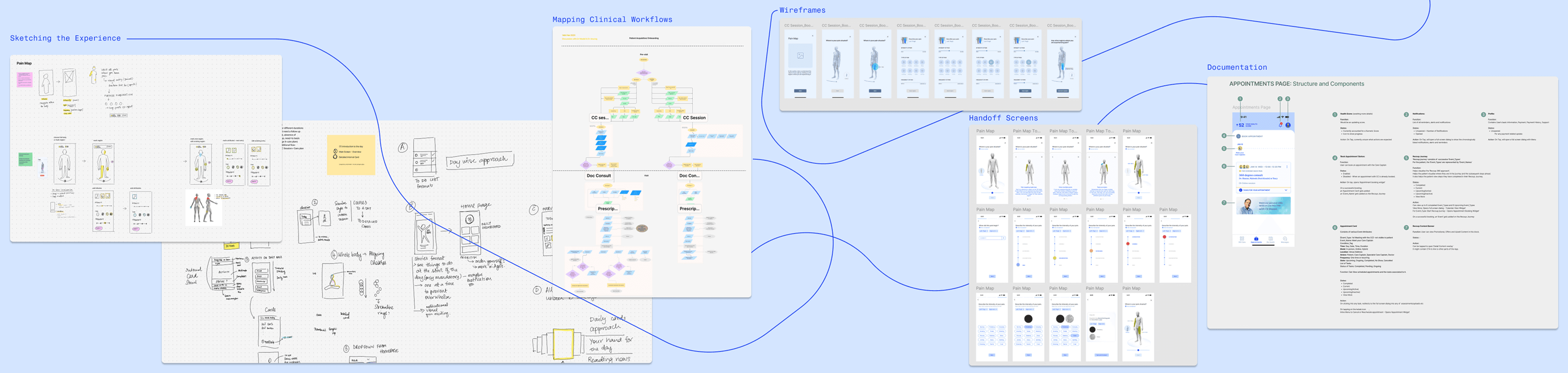
Chronic care is complex. Building for it digitally is harder.
Chronic care doesn't fit a standard product brief. Conditions are variable, recovery is non-linear, and motivation erodes over months — not minutes. The challenge was to design for behavior.
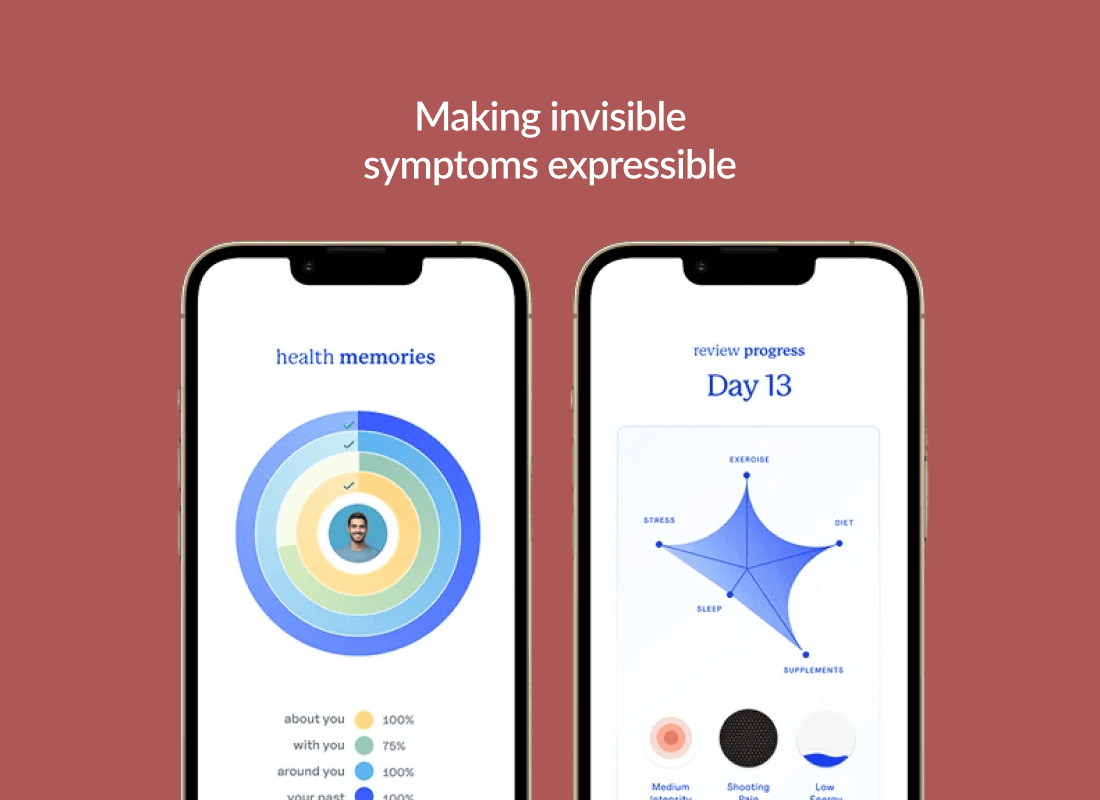
Designing a service, then designing interfaces
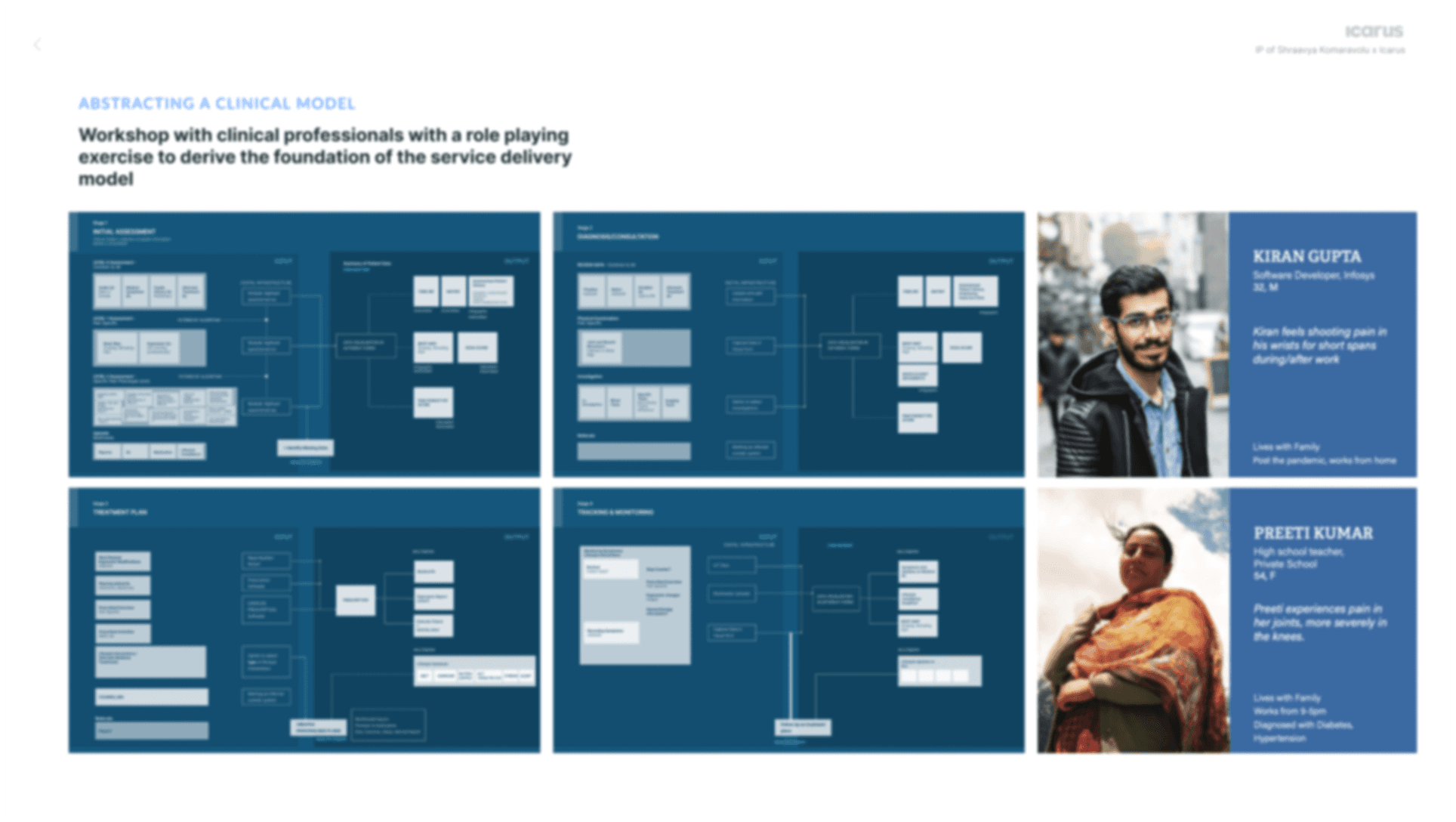
I ran structured discovery: facilitating workshops with 15+ clinical experts, conducting user interviews across all four roles, and applying the Cynefin framework to map care complexity — ensuring design decisions were grounded in clinical reality, not assumptions.

Where engineering thinking meets design
The service model came before the sitemap. Drawing on my background in systems design, I mapped data flows, handoff points, and role permissions as an engineering artefact first — sequence diagrams, not wireframes. The interface followed from that logic.
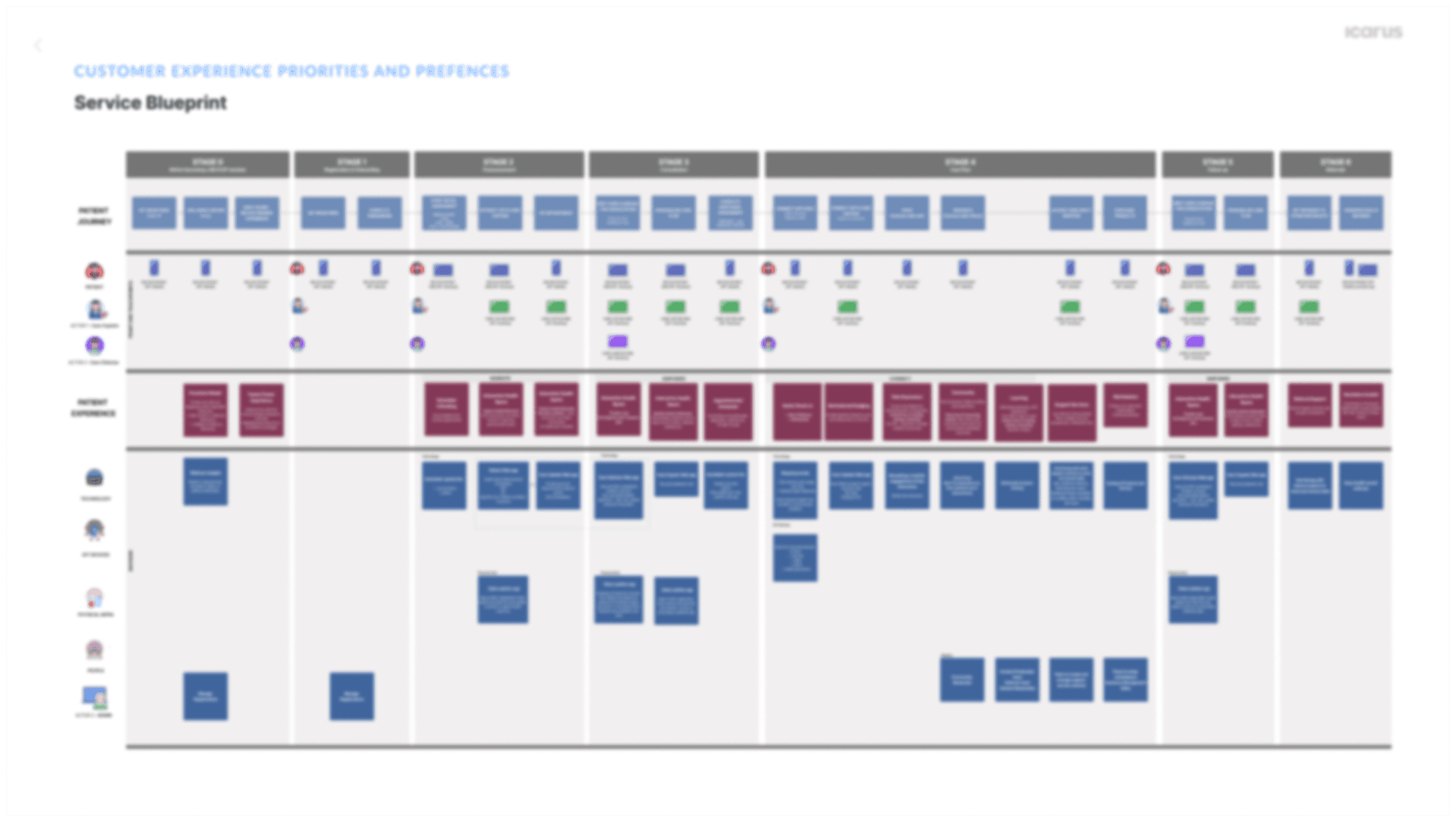
Modelled how care activities would be sequenced and adapted over time — based on patient progress, adherence, and clinical inputs — giving the product a way to evolve with each patient rather than following a fixed path.
Key decisions that defined the ecosystem.
"Started as apps. Ended as a care ecosystem."
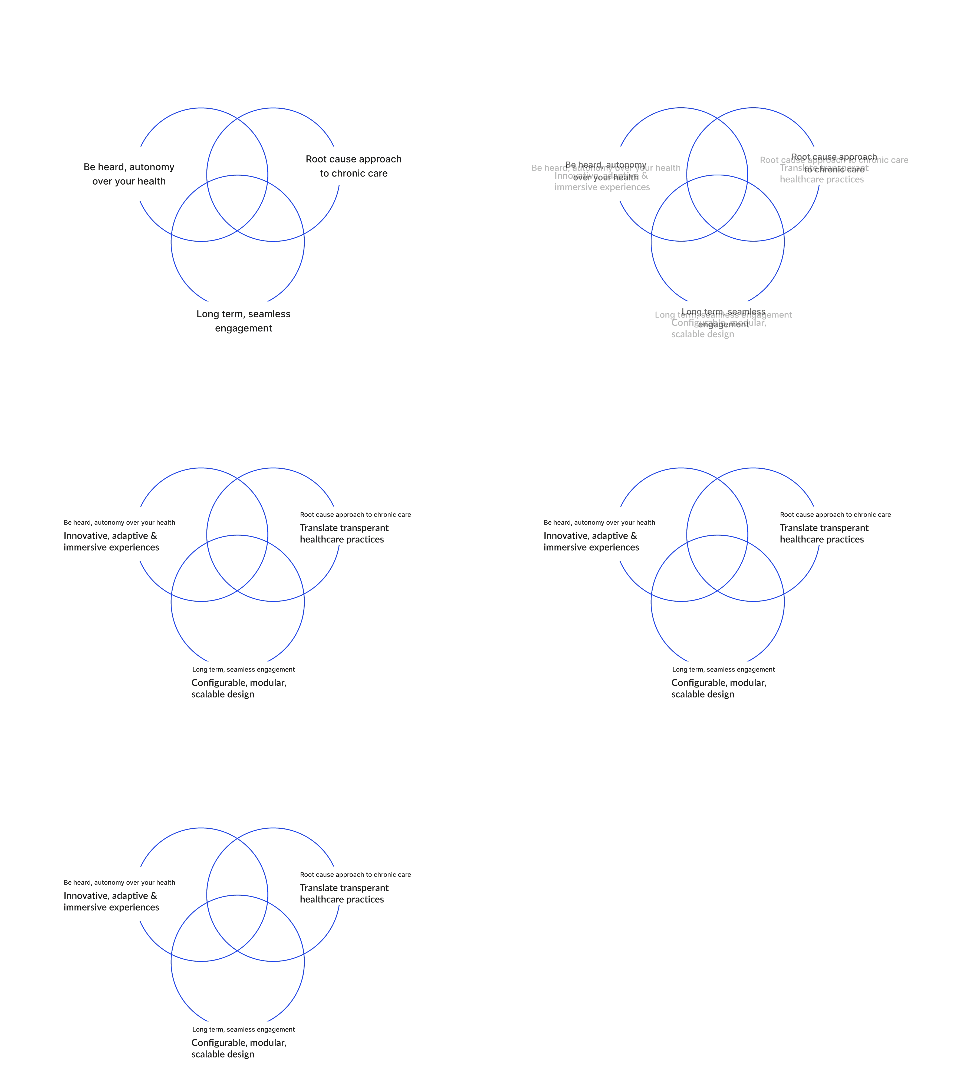
The pillars were the decisions that shaped the product's architecture. Each one was a call made under ambiguity that held through to launch.
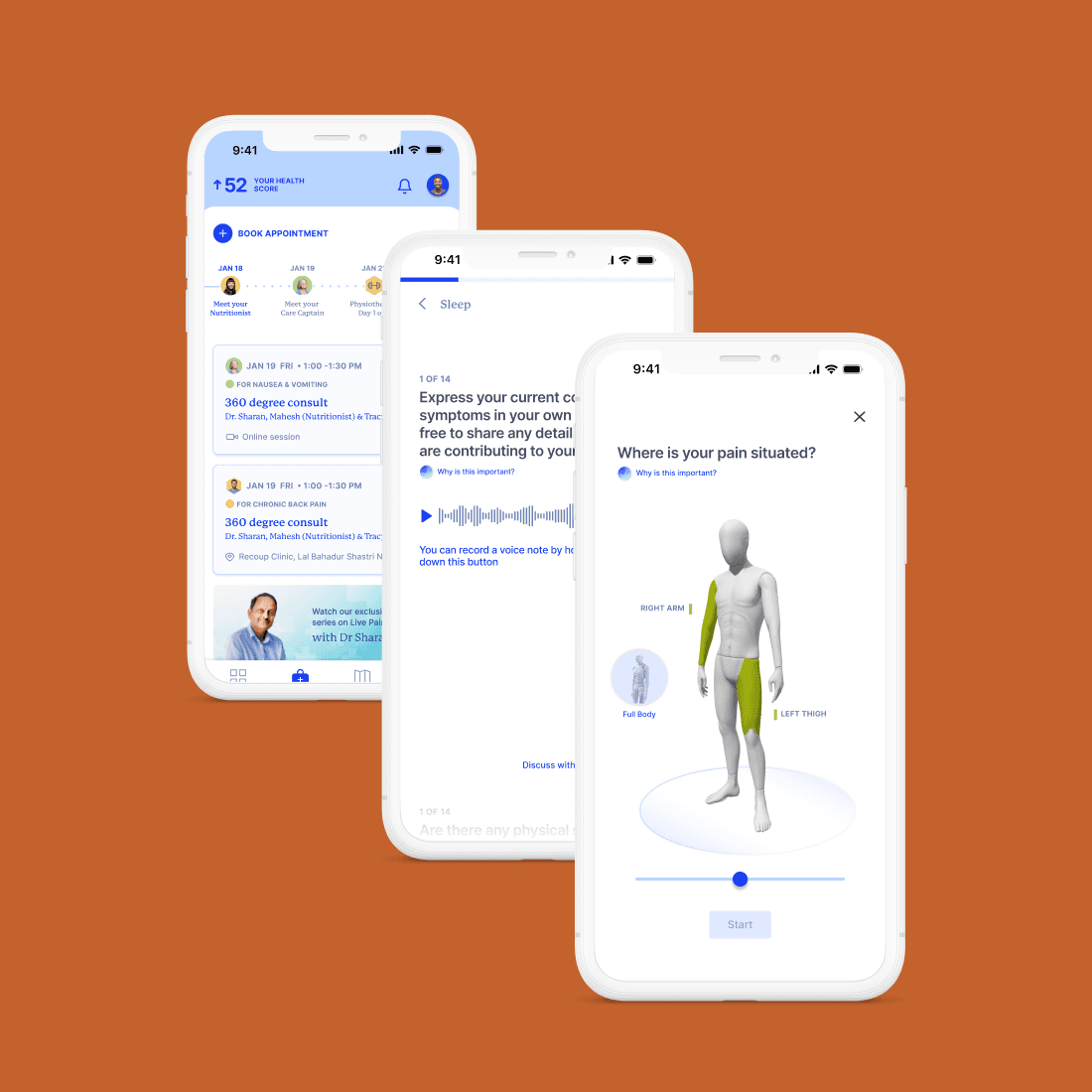
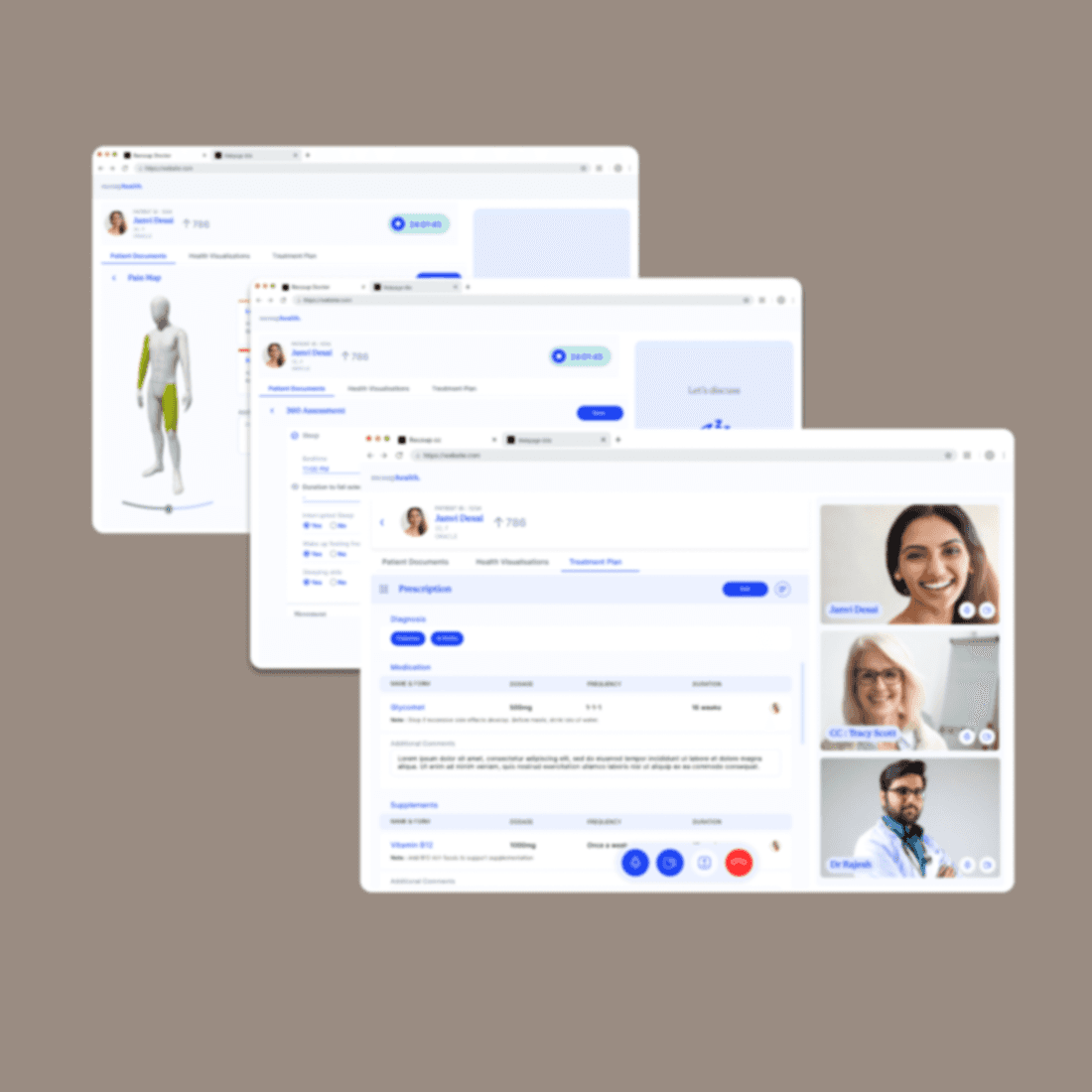
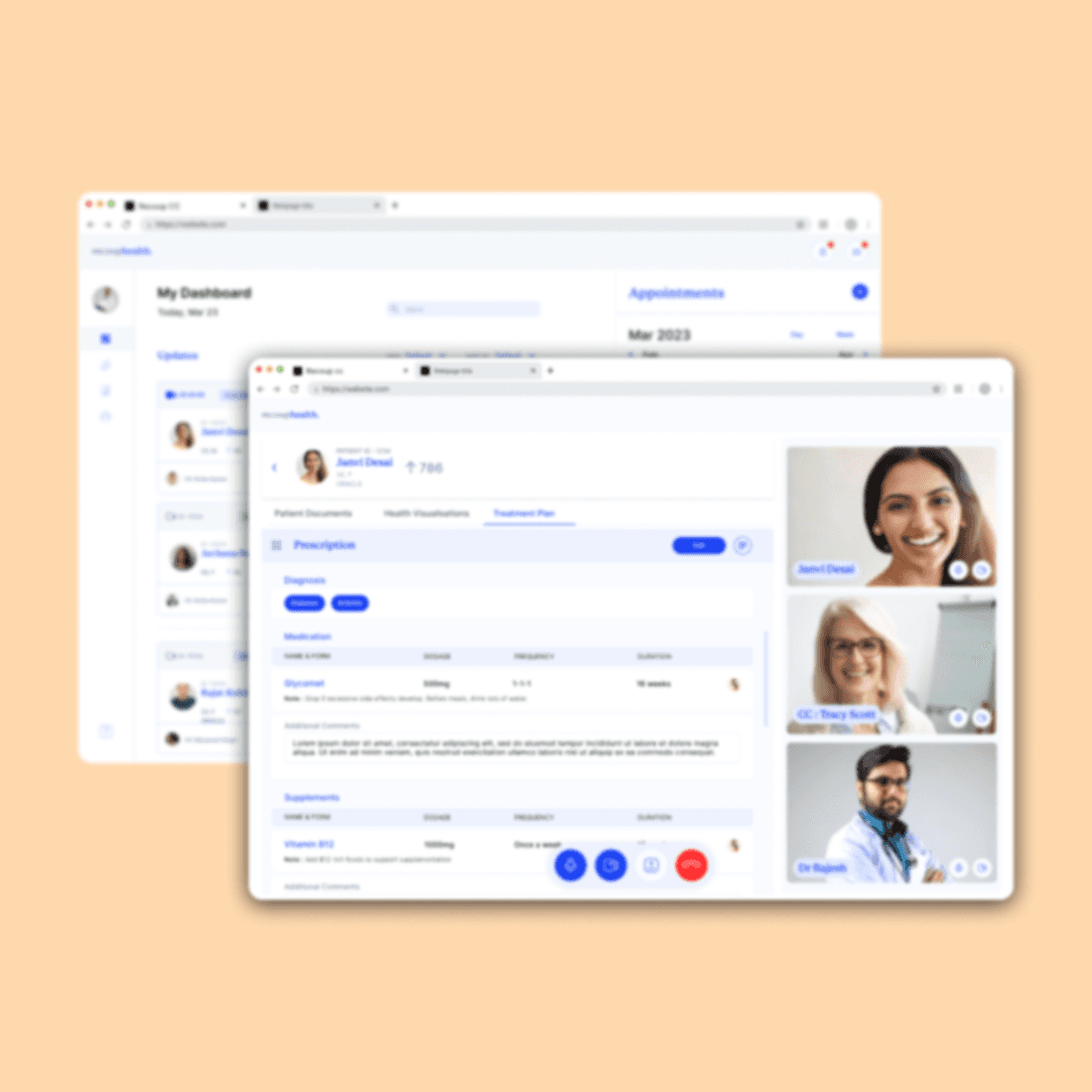
Distinct apps. One ecosystem. All connected.
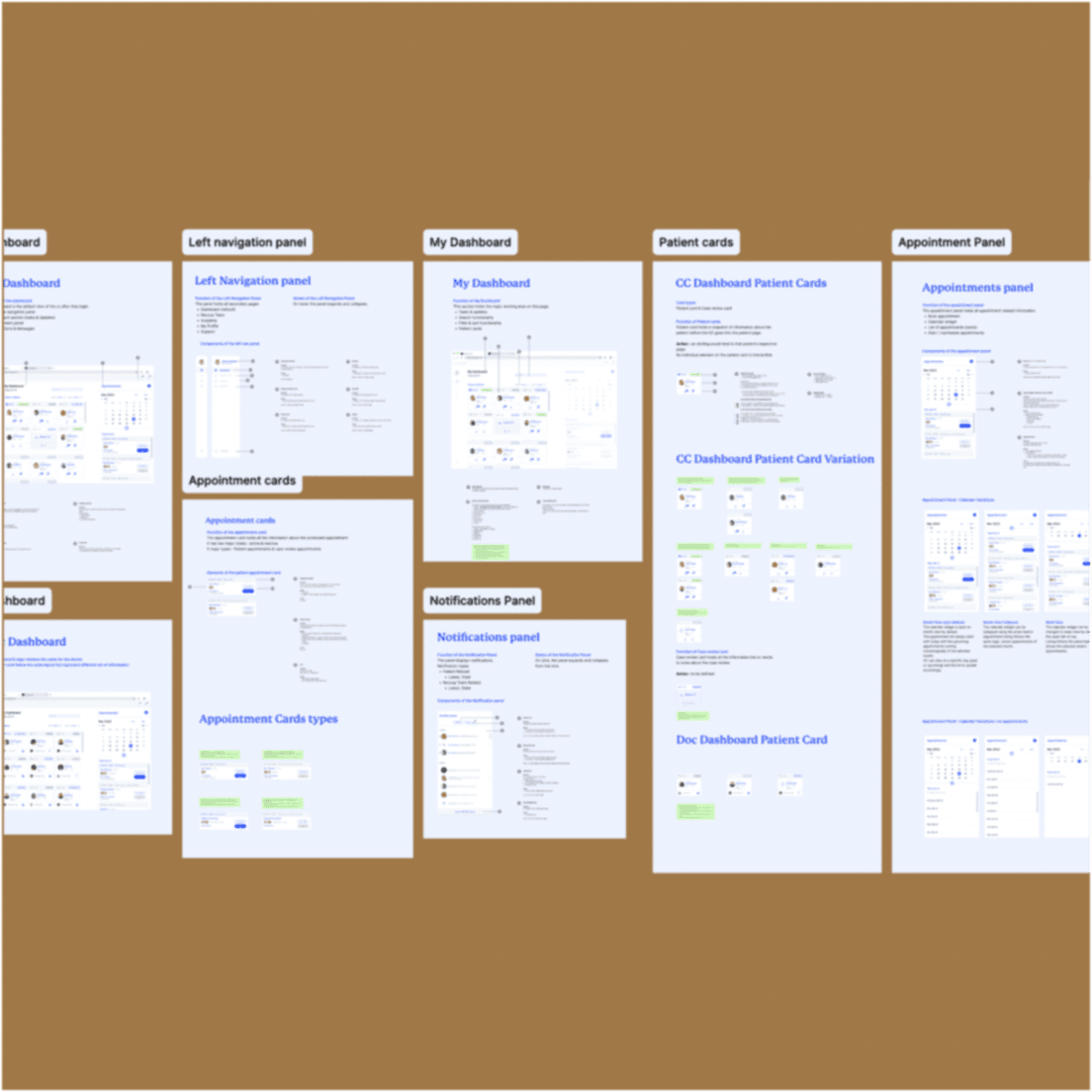
Working across clinical, digital, and strategic
The work spanned three functions simultaneously: clinical (translating medical nuance from workshop sessions into interaction logic), product (moving from research to a service model directors and engineering could execute against), and technical (API sequence diagrams delivered alongside designs so development could run in parallel, not wait on handoffs).
The hardest call was architectural: lock a shared data model early and let each surface optimise within it, or let teams design independently and reconcile later. I pushed for the former. It held through launch and avoided significant re-work.
What shipped
Looking back
By engaging deeply with clinical workflows, I shifted my role from feature design to systems thinking. Workshops and service blueprints became alignment tools for cross-functional teams. A key outcome was enabling collaboration across design system teams to proactively address interoperability.