MED TECH | UI /UX DESIGN

MED TECH | UI /UX DESIGN

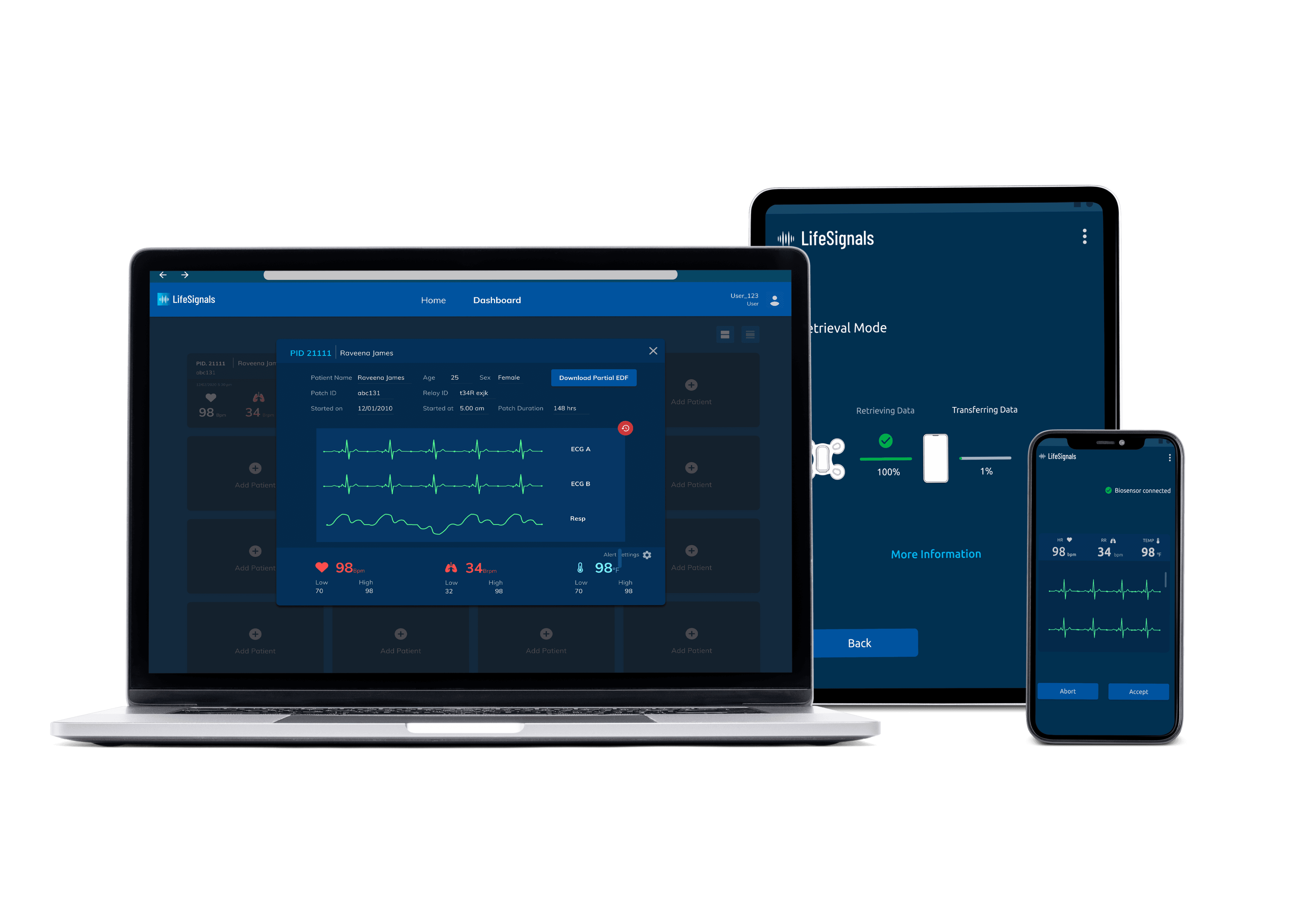
Designing a remote patient monitoring system to enable healthcare practitioners to continuously monitor real-time values of patient-generated health data (PGHD)

Designing a remote patient monitoring system to enable healthcare practitioners to continuously monitor real-time values of patient-generated health data (PGHD)

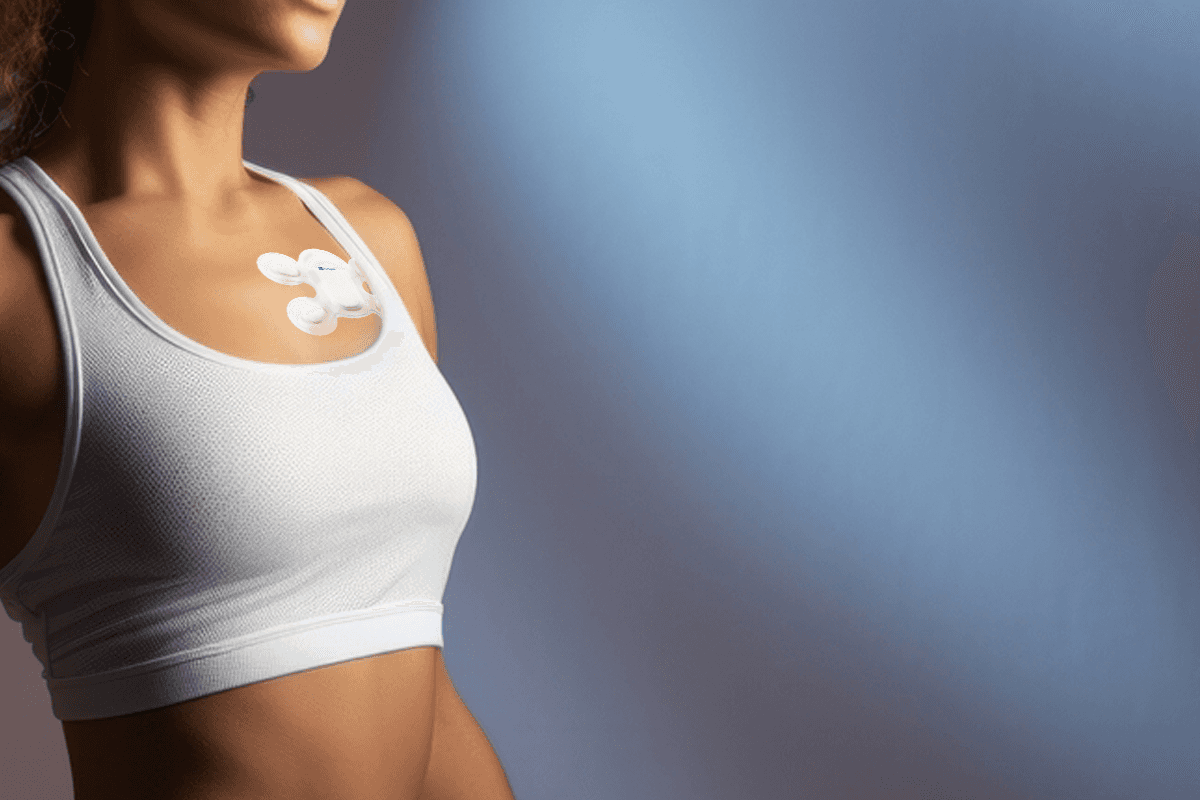
Lifesignals developed a single use wearable biosensor that records Electrocardiography, Heart Rate, Respiration Rate, Skin Temperature and Body Posture data for up to six days.


I was tasked with designing the introduction of their digital solution into the market, particularly beneficial for post-operative care and managing chronic diseases

Lifesignals developed a single use wearable biosensor that records Electrocardiography, Heart Rate, Respiration Rate, Skin Temperature and Body Posture data for up to six days.


I was tasked with designing the introduction of their digital solution into the market, particularly beneficial for post-operative care and managing chronic diseases

designed at
TIMELINE

March - May 2020: 3 Months

TEAM

Design Director

ROLE

As solo designer on the project, drove the end to end design and handover of the Provider facing WebApp and Patient facing Mobile and Tablet App.

CLIENT

LifeSignals® Inc, USA.
Remote Monitoring Web App

Context

  • The wireless transmission of data can be utilised for in-hospital monitoring as well as post-discharge monitoring.

  • The dashboard based platform for continuous surveillance can be used by practitioners, administrators and care givers enables them to promptly respond to any anomalies in the patient's condition, ensuring timely and appropriate care.

Remote Monitoring Web App

Context

  • The wireless transmission of data can be utilised for in-hospital monitoring as well as post-discharge monitoring.

  • The dashboard based platform for continuous surveillance can be used by practitioners, administrators and care givers enables them to promptly respond to any anomalies in the patient's condition, ensuring timely and appropriate care.

Target users

End users of the platform were typically nurses, hospital administrators, Caregivers and patients themselves. Within a healthcare infrastructure, defining the RBAC was critical.

Target users

End users of the platform were typically nurses, hospital administrators, Caregivers and patients themselves. Within a healthcare infrastructure, defining the RBAC was critical.

Process

From envisioning the system of apps that would be needed in collaboration with the business team and product teams.

Actively worked with the teams to derive resemblance with their way of working and patterns of actions they regularly exhibit. Identify the parameters that largely give them a picture of the patients health.

Derive the functional blocks and modules for each of the applications.

Core Functionality
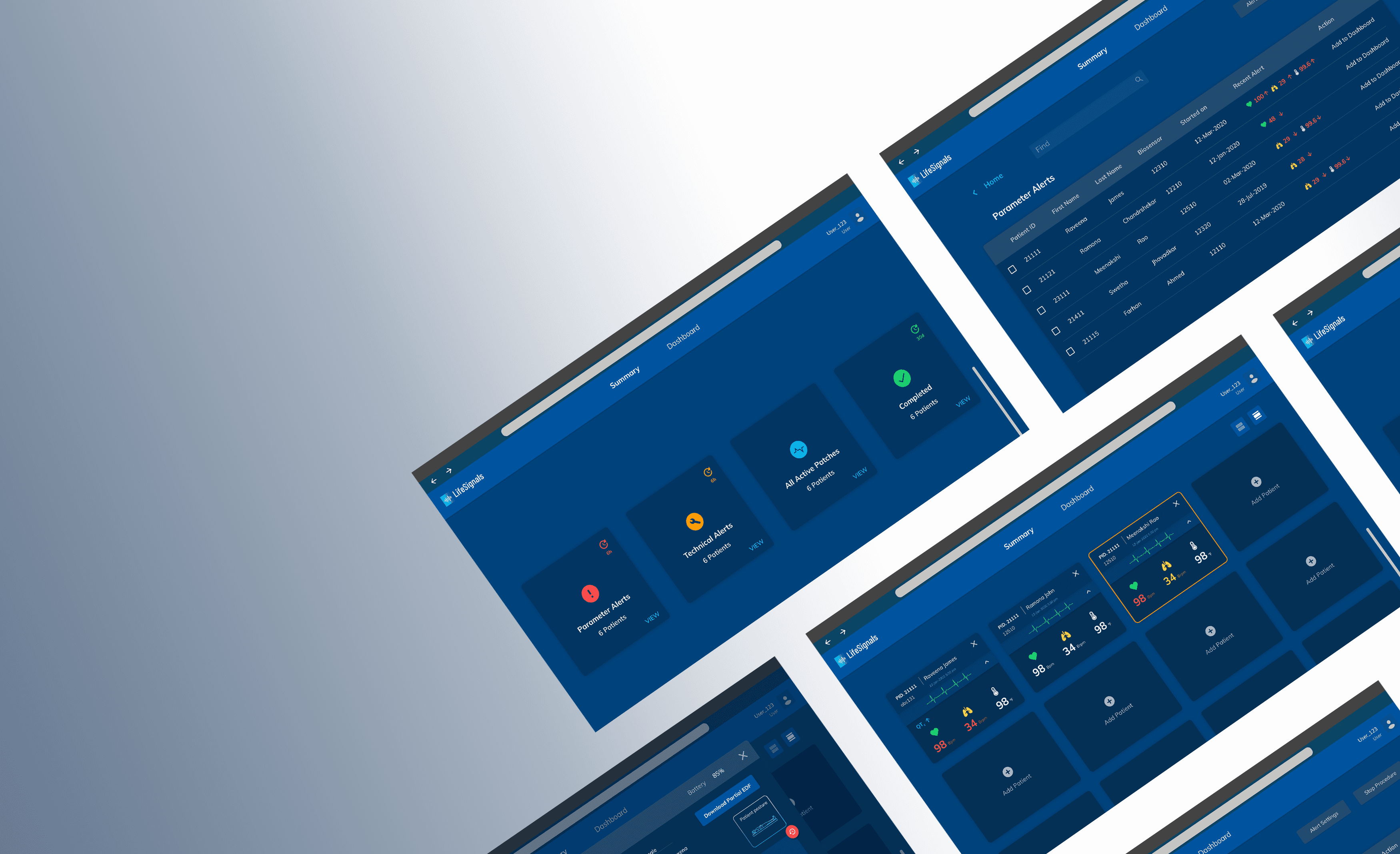
Built to replace a clinician’s convoluted workflow, that platform was designed as a solution focussed on efficiency, convenience and accessibility.

The goal was to relieve the staff of anxiety in the wards and increase their productivity be reducing manual interventions.

Built to replace a clinician’s convoluted workflow, that platform was designed as a solution focussed on efficiency, convenience and accessibility.

The goal was to relieve the staff of anxiety in the wards and increase their productivity be reducing manual interventions.

Creating smart hospital wards

Creating smart hospital wards

01

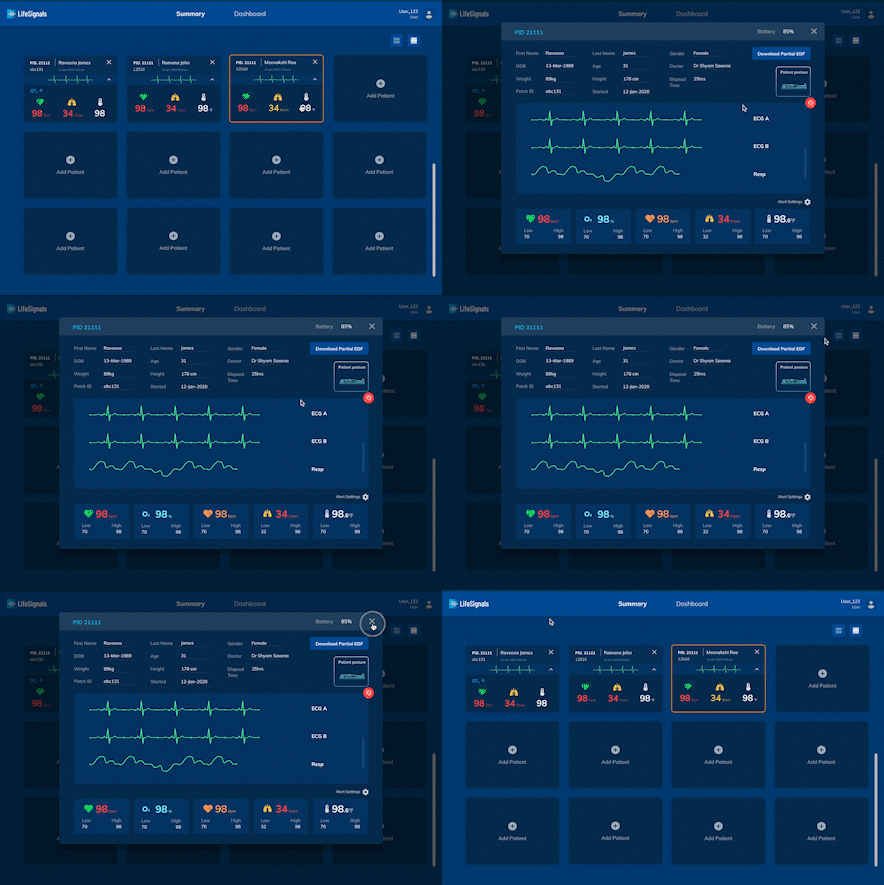
Designed with clarity and simplicity as the focus, reducing cognitive load and confusion by reducing the options and enabling clinicians to respond in seconds.

At a glance, care providers can find the patient's ID (e.g., bed number), name, and the vital sign that crossed the threshold. The visual hierarchy of the components is critical, ensuring that the most important information is immediately evident.

Designed with clarity and simplicity as the focus, reducing cognitive load and confusion by reducing the options and enabling clinicians to respond in seconds.

At a glance, care providers can find the patient's ID (e.g., bed number), name, and the vital sign that crossed the threshold. The visual hierarchy of the components is critical, ensuring that the most important information is immediately evident.

Alerts and notifications

Alerts and notifications

02

The alert system was designed to inform without overwhelming. Different levels of colors were used to indicate different levels of urgency, helping healthcare providers to quickly identify and prioritize the most critical alerts.
Additionally, the system allowed for custom alerts to be created for each patient, giving providers a control center for each individual under their care.

The alert system was designed to inform without overwhelming. Different levels of colors were used to indicate different levels of urgency, helping healthcare providers to quickly identify and prioritize the most critical alerts.
Additionally, the system allowed for custom alerts to be created for each patient, giving providers a control center for each individual under their care.

Customised to every infrastructure

Customised to every infrastructure

03

Modularly conceptualised, it is highly configurable and integrates with any hospital EHR, making it scalable to establishments of all sizes. It allows for seamless switching between different logins, without disrupting the user experience.

Modularly conceptualised, it is highly configurable and integrates with any hospital EHR, making it scalable to establishments of all sizes. It allows for seamless switching between different logins, without disrupting the user experience.

Testing and Feedback

In UAT, the design was easy to adopt and intuitive, allowing new care providers to begin using the platform to its full capacity in just a few minutes.


The dark theme was preferred by practitioners in hospitals, as it is easier on the eyes in the different lighting conditions of hospitals and nursing homes. Alerts were made more prominent with colors synonymous to alerts.

In UAT, the design was easy to adopt and intuitive, allowing new care providers to begin using the platform to its full capacity in just a few minutes.


The dark theme was preferred by practitioners in hospitals, as it is easier on the eyes in the different lighting conditions of hospitals and nursing homes. Alerts were made more prominent with colors synonymous to alerts.

Patient & Caregiver Mobile App

Patient & Caregiver Mobile App

Context

The wearable patch is prescribed to patients who experience cardiac abnormalities. The patch is worn for a week to allow healthcare providers or hospitals to monitor their vitals.
The patient could be anyone, from those in recovery to those suspecting an underlying heart condition.

The wearable patch is prescribed to patients who experience cardiac abnormalities. The patch is worn for a week to allow healthcare providers or hospitals to monitor their vitals.
The patient could be anyone, from those in recovery to those suspecting an underlying heart condition.

Set up in 3 steps

01

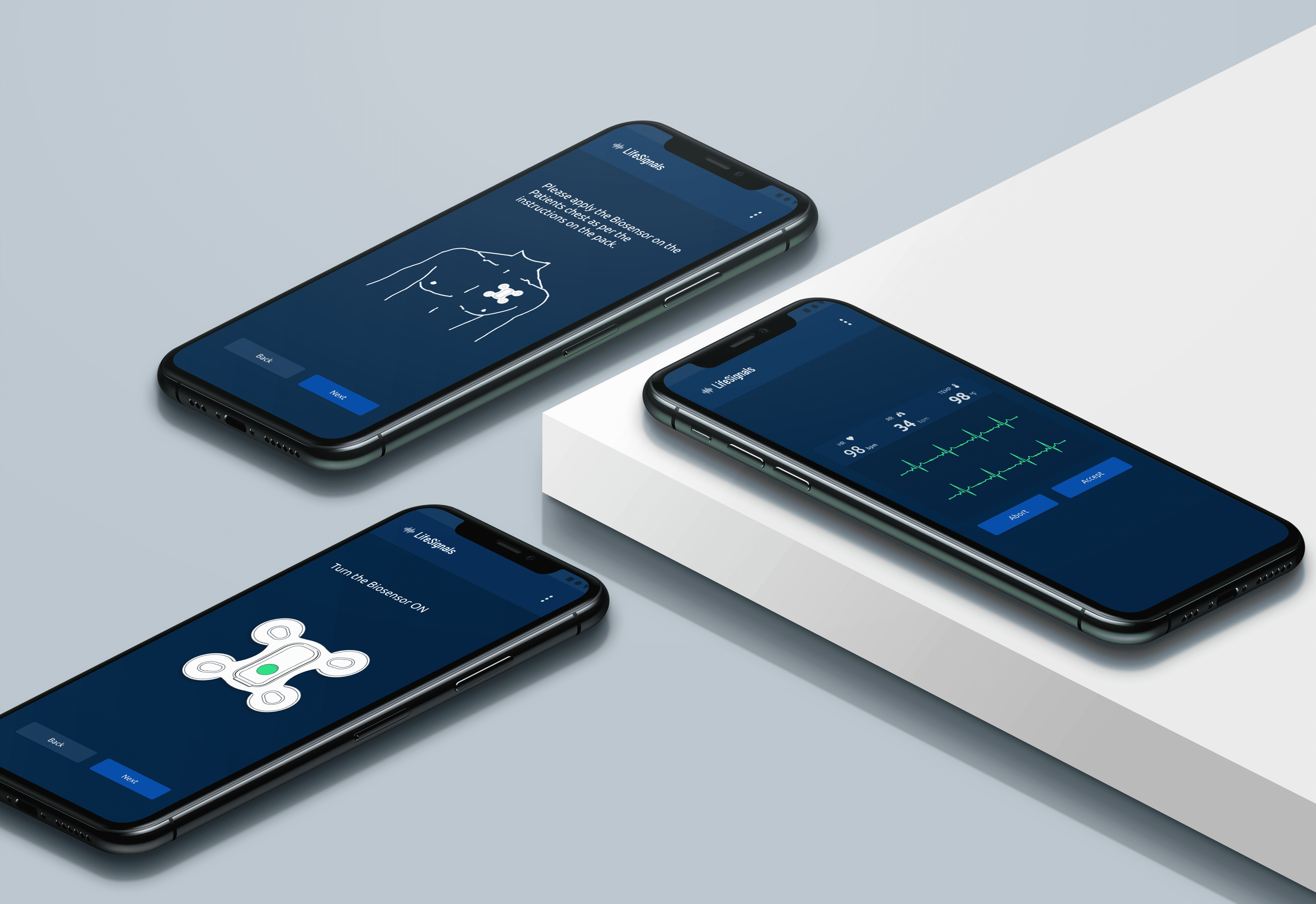
The patch is designed to be self-administered, with easy-to-follow illustrated instructions to guide patients through the initial setup process, ensuring a successful application.

The patch is designed to be self-administered, with easy-to-follow illustrated instructions to guide patients through the initial setup process, ensuring a successful application.

Always connected and cared for.

02

The waveform indicates the connection status and immediately reflects the values. The troubleshooting mechanism uses similar steps to the setup process, keeping the components consistent.

The waveform indicates the connection status and immediately reflects the values. The troubleshooting mechanism uses similar steps to the setup process, keeping the components consistent.

Reporting symptoms, a button click away

03
The button mimics the wearable's form and behavior, allowing patients to report symptoms by simply pressing it.

The button mimics the wearable's form and behavior, allowing patients to report symptoms by simply pressing it.

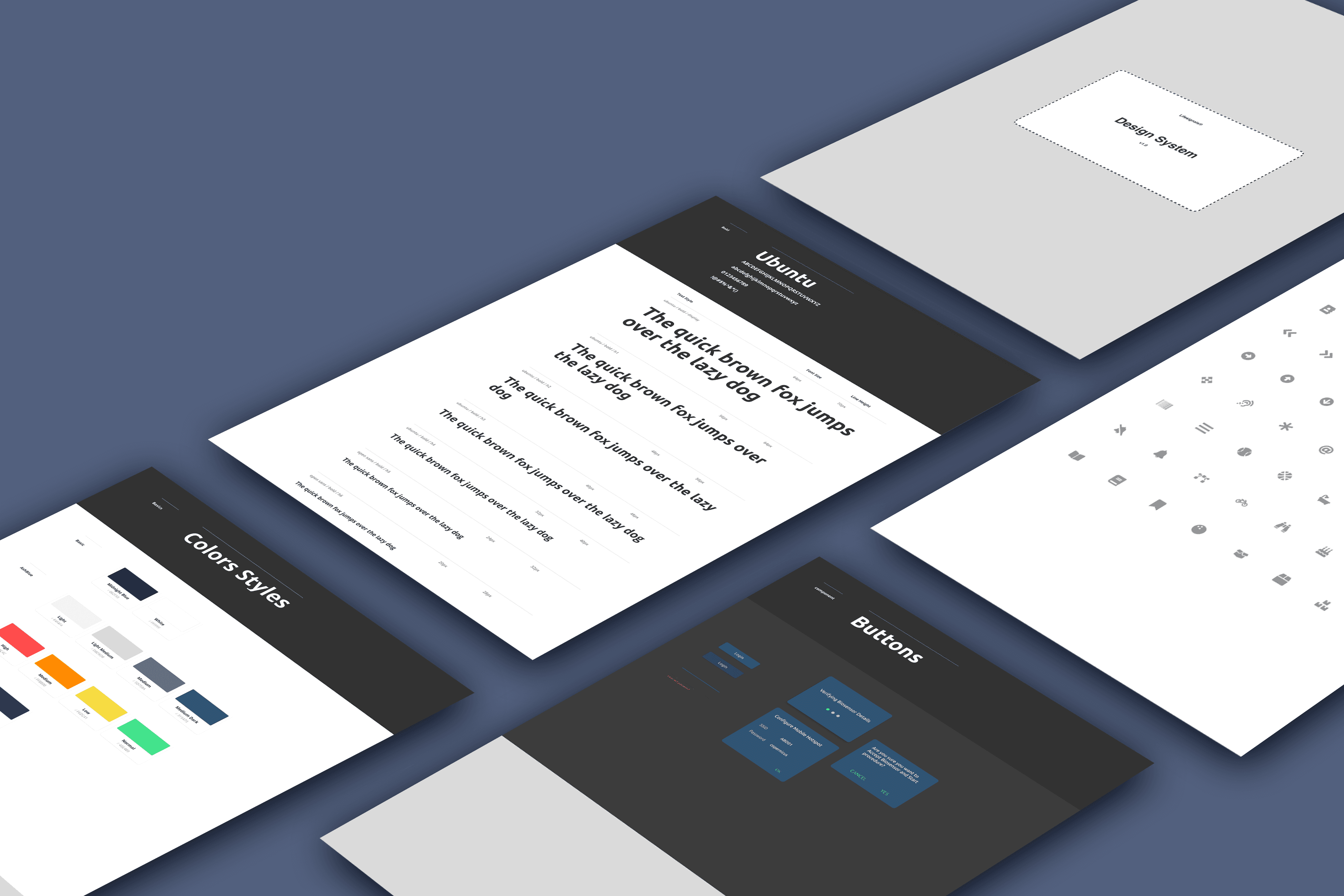
Design System

The design system complies with medical certification guidelines. The app's navigation is linear, and its components are consistent and modular, making it scalable to meet various institutional requirements. The visual language is simple and tweaked to adhere to certification standards.

Impact

The platform received multiple regulatory clearances across the globe.It has been deployed globally in over 56+ hospitals saving lives and preventing over clinical decline cases. It was deployed during COVID 19 for home-monitoring.

NEXT PROJECT

NEXT PROJECT

Let’s work together

© 2026 Shraavya Komaravolu

Let’s work together

© 2026 Shraavya Komaravolu